
When the Scales and Measures Division of the Arizona Department of Transportation is weighing commercial vehicles in the field, efficiency matters. If crews are forced to work around a trailer that wasn’t designed for their workflow, even simple tasks can become frustrating and time-consuming.
ADOT’s existing portable truck scale trailer technically worked, but it required constant workarounds in the field. Operators were dealing with limited storage, exposed electrical components, inefficient deployment systems, and the need for a second trailer to transport signs and supporting equipment.
Rather than continue adapting to a trailer that didn’t meet their needs, they turned to Fleming Trailers for a complete redesign.
The result was a custom-built scale trailer that combined two trailers into one, streamlined equipment organization, improved durability, and allowed a single operator to manage the entire process from start to finish.
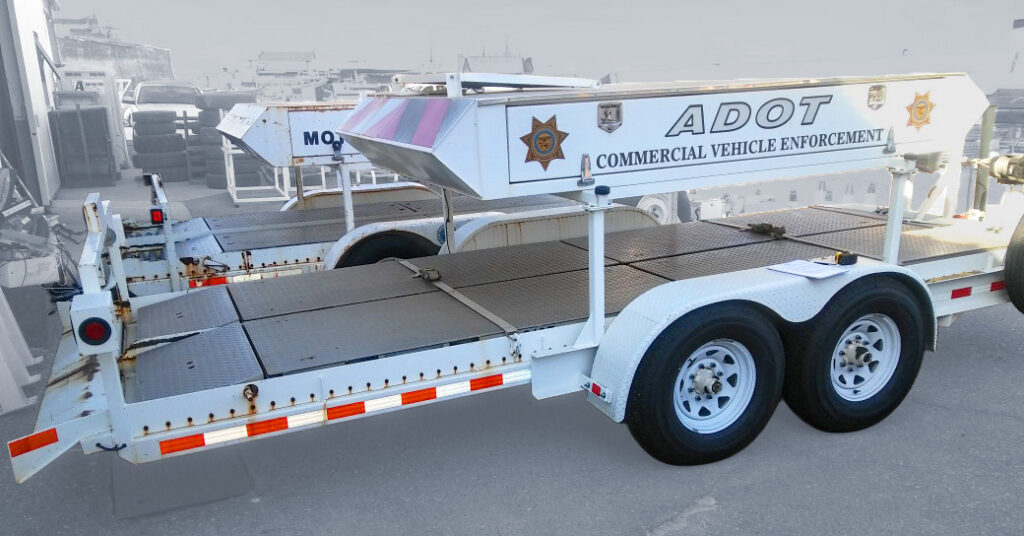
The Problem: An Underbuilt Trailer That Couldn’t Keep Up
After years of use, operators had identified a growing list of frustrations that made operating their scale trailer in the field more difficult than it needed to be.
According to the team using the trailer, several key issues stood out:
- The trailer frame and tongue were underbuilt for the application
- Storage space was limited and poorly organized
- Electrical components were exposed to weather and damage
- The deployment system was cumbersome to operate
- Signs and support equipment required a separate trailer
- Operators had to work around design limitations every day in the field
ADOT’s Scales and Measures Division didn’t need another standard trailer. They needed a solution built around how they actually worked in the field.
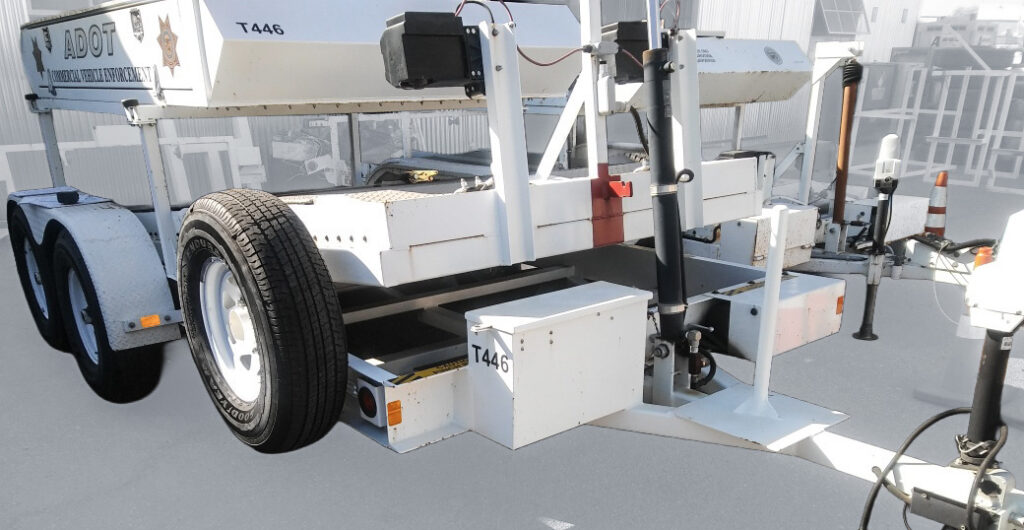
The Solution: Designing Around ADOT’s Actual Workflow
Rather than simply copying the existing trailer, Fleming Trailers worked directly with the ADOT to understand what they liked, what they disliked, and what obstacles they faced during deployment.
The goal was simple: Create a single trailer that could transport scales, signs, tools, and support equipment while allowing one person to handle the entire operation.
To accomplish that, nearly every aspect of the trailer was redesigned.
1. Expanding the Trailer and Increasing Storage Capacity
One of the first improvements was increasing the trailer’s size. Fleming extended the deck by approximately four feet, creating additional room for equipment storage and improving overall functionality.
The redesign also eliminated an overhead storage compartment that operators found cumbersome and replaced it with more practical storage solutions designed around the equipment they used every day. By relocating and reorganizing storage, operators gained easier access to equipment while keeping critical components protected from weather and road debris.
2. Combining Two Trailers Into One
One of the biggest improvements involved consolidating equipment that had previously required a second trailer.
Before the redesign, crews often needed an additional trailer to transport traffic-control equipment used during scale operations.
Fleming incorporated dedicated storage directly into the new design, including:
- Storage for traffic-control signs beneath the tilt deck
- Storage for sign supports between the front compartments
- Integrated cone storage on the trailer fenders
- Secure storage for scale accessories and support equipment
By bringing everything onto a single trailer, ADOT no longer needed multiple trailers or multiple operators to complete the job. The trailer was not operable by just one person.
3. Building a Stronger Trailer for Daily Use
The original trailer’s structure was another area that needed improvement. Operators reported concerns about the trailer’s overall strength, particularly the tongue and frame design.
To address those concerns, Fleming Trailers reinforced the frame and upgraded the trailer’s structural components to create a stronger, more durable platform capable of handling the demands of frequent deployment and transportation.
The upgraded construction provides greater long-term reliability while helping reduce maintenance concerns caused by wear and tear in the field.
4. Simplifying Scale Deployment
One of the most significant engineering changes involved the trailer’s tilting system.
The original trailer used a large front-mounted hydraulic cylinder to raise and lower the deck. The design required additional locking mechanisms and safety systems that complicated operation and created additional maintenance concerns.
Fleming replaced the cylinder-based setup with a hoist system similar to those used on dump trailers.
The redesigned system simplified operation and made loading and unloading the portable scales more efficient while reducing unnecessary complexity.
Small Design Changes That Solved Big Problems
Many of the most valuable improvements came from addressing smaller frustrations that operators encountered every day.
1. Internal Wiring Protection
On the original trailer, exposed wiring was vulnerable to damage from weather, debris, and repeated use.
To improve reliability, Fleming Trailers routed electrical wiring through the trailer’s structure, protecting it from external damage while creating a cleaner and more durable installation.
2. Rear Rollers for Smoother Deployment
The original trailer could drag against the ground during deployment, creating unnecessary wear on both the trailer and surrounding surfaces.
To solve the issue, Fleming Trailers added heavy-duty rear rollers that allow the trailer to roll smoothly during operation rather than scrape against the ground. This simple improvement helps reduce wear while improving deployment performance.
3. Better Equipment Placement
Additional refinements included relocating the spare tire beneath the deck and repositioning key components to improve accessibility and maximize usable storage space.
Every change was made with one goal in mind: making the trailer easier to use in real-world conditions.

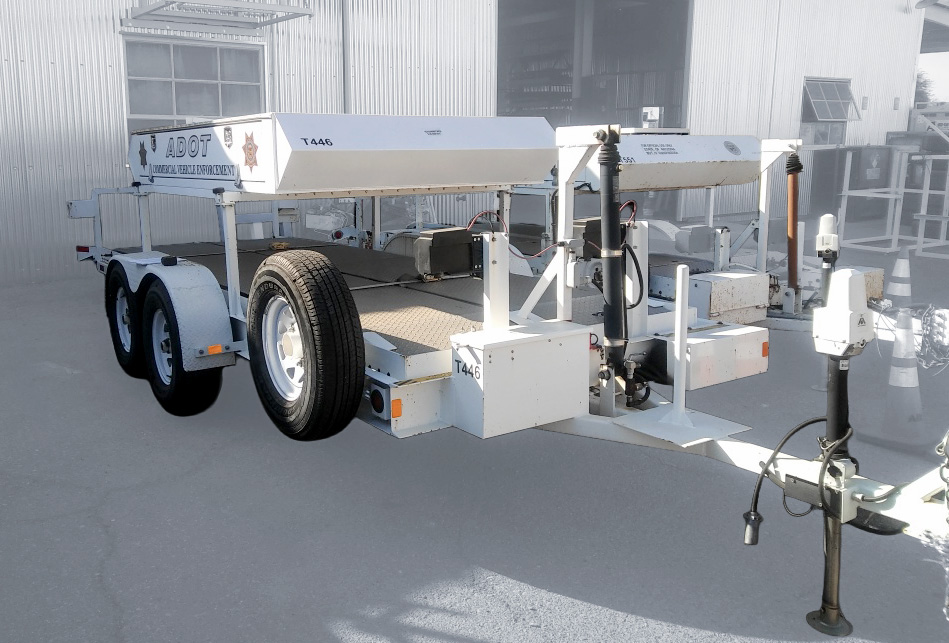
The Result: A True One-Person Operation
What previously required multiple trailers, additional equipment, and constant workarounds can now be handled with a single, purpose-built trailer.
The redesigned system allows a single operator to:
- Transport scales and support equipment in one trailer
- Keep tools, signs, and accessories organized
- Protect electrical systems from weather and damage
- Deploy scales more efficiently
- Eliminate the need for a second support trailer
- Manage the entire operation with a single operator
Most importantly, the trailer was designed around ADOT’s specific workflow rather than forcing operators to adapt to a generic design.
Fleming Trailers: Custom Trailers Built Around The Way You Work
At Fleming Trailers, the goal isn’t simply to build trailers that move equipment from one location to another. It’s to understand how customers work and design solutions that improve efficiency and solve problems that off-the-shelf equipment often can’t.
For ADOT’s Scales & Measures Division, that meant transforming an underbuilt, two-trailer setup into a streamlined, one-person operation.
Looking for a Custom Trailer Built Around Your Operation?
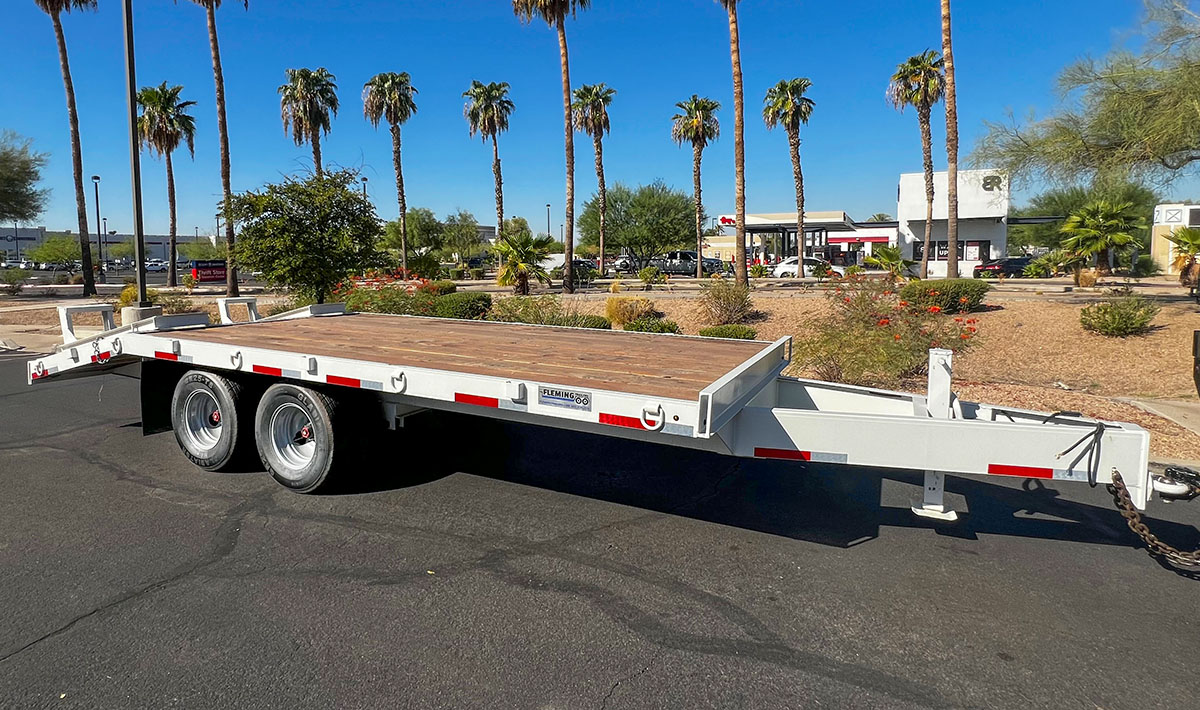
Whether you need a specialized scale trailer, a custom utility trailer, or a fully engineered hauling solution, Fleming Trailers works directly with you to design solutions that fully support the way you actually work.
The best trailer isn’t always the one sitting on a lot—it’s the one built specifically for the job.